
If you are looking for clothing that feels great on the first wear and still has a place in your closet five years later, the label alone won't tell you that. What matters is the fiber, how the garment is built, and how you plan to live in it. Here's what I look at when I design for women who want pieces that last and stay comfortable while living a full, busy life.
Key takeaways
-
The exact fiber name matters less than the construction: seams, weave density, and yarn quality predict how long a garment lasts better than whether the tag says linen or cotton.
-
Linen and hemp are the strongest natural fibers, while good cotton and wool last for years when they're well made; most natural fabrics get softer and more comfortable with wear.
-
"Organic" describes how the fiber was grown, not how durable the finished garment is. The Global Organic Textile Standard (GOTS) requires a minimum of 70% certified organic fibers in a product.
-
Comfort comes from breathability and moisture handling, not just a soft first touch. Cotton, linen, and wool let air move and pull moisture away from your skin.
Which natural fibers hold up best for everyday wear?
Linen and hemp are the most durable natural fibers, and long staple cotton and well-made wool follow close behind. That's the short answer. The longer one depends on how you plan to wear the piece and what you want it to feel like against your skin.
I work mostly in linen, hemp and organic cotton because they cover the range a woman in midlife actually reaches for: something breezy for warm afternoons, something soft for travel, something that holds a relaxed shape without fuss. Each fiber has a personality, and knowing it can save you from disappointment later.
|
Fiber |
How it feels |
Where it shines |
What to expect over time |
|---|---|---|---|
|
Linen |
Cool, crisp, breathable |
Warm weather, travel, layering |
Very strong; softens and relaxes with every wash; wrinkles, and that's part of its charm |
|
Hemp |
Sturdy, slightly textured |
Hard-wear pieces, structured shapes |
Among the strongest fibers; softens continually as washed and worn |
|
Organic cotton |
Soft, easy, familiar |
Everyday tops, gauze layers, shorts |
Softens quickly; can thin at friction points if the weave is loose |
|
Wool |
Warm, springy, insulating |
Cooler seasons, temperature swings |
Resists moisture and odor; needs gentler care |
Wool deserves a note here even though I don't build my line around it. Its fibers have a natural crimp that traps pockets of air, so it keeps you warm without feeling heavy, and it can hold moisture vapor before it ever feels damp. That's why a wool piece feels comfortable across a wide range of temperatures.
How can you judge durability before you buy?
Look at the construction, because that can often predict a garment's lifespan more reliably than the fiber name. A durability report from Fashion Times notes that yarn quality, fabric density, seam construction, abrasion points, and fit tell you more about how long a garment lasts than the material label alone (fashiontimes.com). A strong fiber sewn badly still falls apart. A modest fiber sewn well can outlast it.
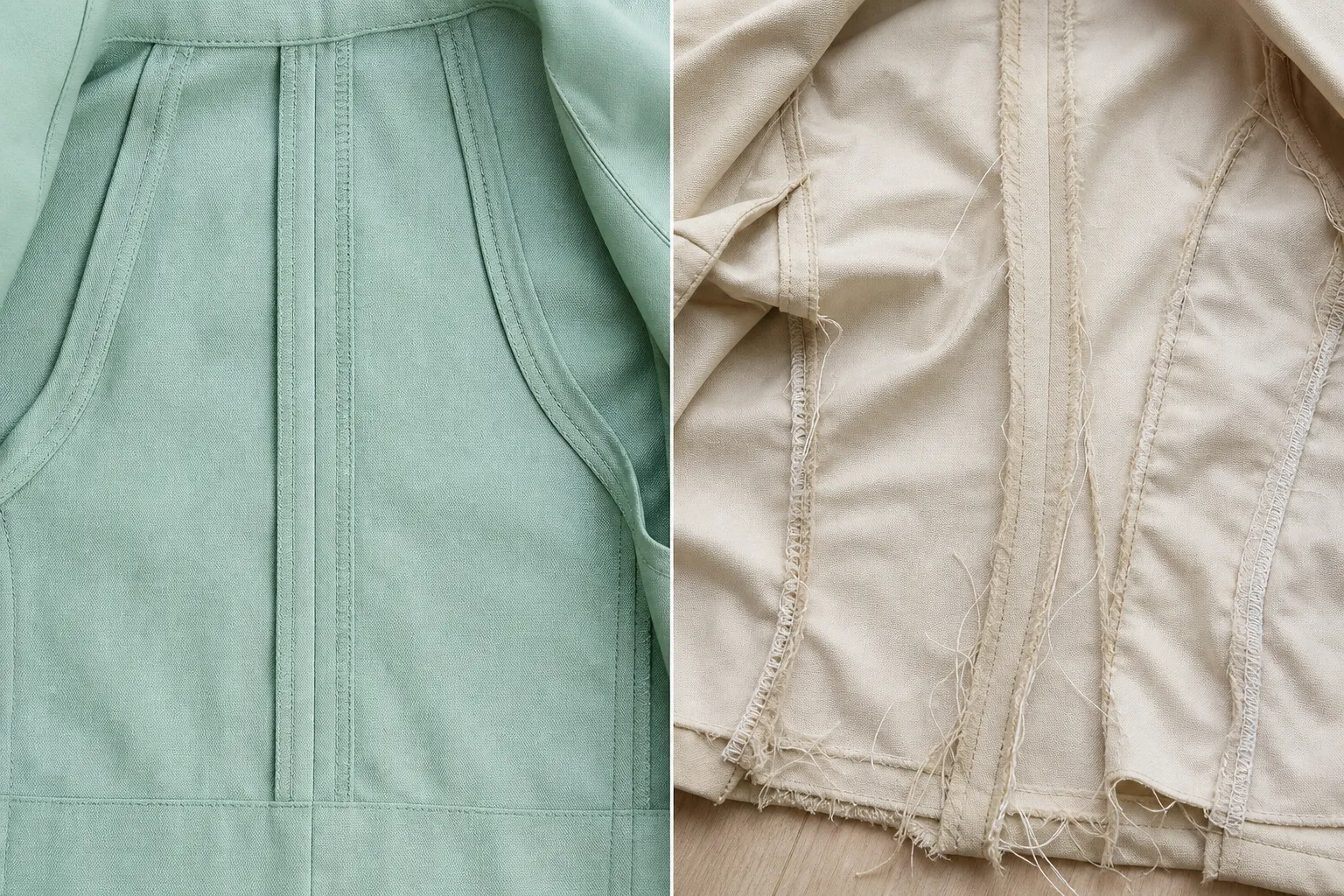
Here's what I check, and what you can too:
-
Hold the fabric up to light. A dense, even weave will last longer than a loose, gappy one. Loose weaves can thin out quickly at elbows, seats, and anywhere the fabric rubs.
-
Turn it inside out. Seams should be finished, not raw and fraying, with tidy stitching and no loose threads. This is where garments fail first.
-
Tug gently at a seam. It should hold firm with no puckering or gaps between stitches.
-
Feel the weight. For a piece you'll wear hard, a little more substance in the hand usually means more life in the garment.
-
Check the stress points. Buttons, cuffs, pocket corners, and armholes take the most strain. Reinforcement there is a sign someone built the piece to last.
The textile industry has a formal way to measure this called the Martindale abrasion test, which rubs a fabric over and over and counts the cycles before it wears through. You won't see a Martindale number on a hangtag, but the principle is the same one your hands are testing: how much friction can this fabric take before it gives.
What makes a natural fiber comfortable to wear all day?
Real comfort comes from breathability and how a fabric handles moisture, not simply from a soft first touch. A fabric can feel lovely in the fitting room and turn clammy by mid-afternoon if it can't move air and manage sweat.
Cotton, linen, hemp, and wool all let air circulate, which helps regulate your body temperature through the day. Linen and hemp actively wick moisture away from your skin and let it evaporate quickly, which also discourages the bacteria that cause odor. That's why a linen top feels fresh on a warm evening walk when a synthetic one would cling.
There's a comfort payoff that most shopping advice skips: natural fibers improve with use. Cotton softens. Linen loses its stiffness and develops a lived-in drape, the way good leather boots break in to your foot. The organic cotton gauze top that feels crisp when it's new becomes the one you keep reaching for a year later. You're not breaking a piece down by wearing it; you're wearing it in.
This is also why I think fit deserves as much attention as fiber. A breathable fabric cut too tight traps heat at the very spots you want air moving. Room to move is part of what keeps a natural fiber comfortable, especially through the body changes that come with midlife.
Does "organic" mean the garment will last longer?
No. Organic tells you how the fiber was farmed, not how long the garment last in your wardrobe. This trips up a lot of thoughtful shoppers, so it's worth separating the two ideas cleanly.
Organic certification is real and worth valuing for what it actually covers. GOTS, the leading standard for organic textiles, requires a product to contain at least 70% certified organic fibres to carry the label (global-standard.org). Growing cotton organically also cuts reliance on synthetic pesticides and fertilizers, according to the Organic Trade Association's organic cotton fact sheet (ota.com).
What certification does not promise is durability, better dyeing, or stronger seams. Those come from the maker's choices about weave, yarn, and construction. So if you care about both the planet and the lifespan of your wardrobe, treat them as two separate questions: Is the fiber grown responsibly? And is the garment built to last? A good piece answers both. I use natural fibers because sustainability matters to me, and then I build the garment to hold up because that's a different job entirely.
How do you care for natural fibers so they last for years?
Gentle, consistent care is what turns a natural fiber garment into a piece you keep for a decade. Natural fibers can be more sensitive than synthetics to repeated hot washing and hard friction, so a few simple habits protect your investment.
-
Wash cool and wash less. Heat and over-washing are what shrink, thin, and fade natural fibers. Air out a linen or cotton piece between wears instead of laundering it every time.
-
Skip the hot dryer. High heat is the fastest way to shrink and weaken natural fabric. Lay flat or hang to dry when you can. This is also where a garment's dimensional stability shows: a well-made piece holds its shape and size after laundering instead of twisting or shrinking.
-
Wash like with like. Turn pieces inside out and wash with similar colors and weights to reduce abrasion against zippers and rough fabrics.
-
Embrace the wrinkles. Linen wrinkles. That's the fiber being itself, not a flaw. A quick steam or a night on a hanger relaxes most of it, and many women find they stop ironing linen entirely once they make peace with its texture.
For travel, this is genuinely freeing. A linen big shirt or a striped beach pant can go through a sink wash in a hotel room, drip overnight, and be ready by morning. No dryer, no dry cleaner, no ironing board. Pieces that survive that routine are the ones that survive real life.
If you're choosing between two garments and everything else is equal, I'd pick the one with the denser weave and the cleaner seams every time, then care for it gently. That's the combination that quietly outlasts the trend cycle. If you're looking at Goddess Gear pieces, every one is handcrafted in Colorado in natural and organic fibers, and they're designed to be worn hard and washed simply. We preshrink every garment to ensure that it will fit after the tenth wash the same way it does when you first try it on.
Frequently asked questions
is linen or cotton more durable?
Linen is stronger than cotton fiber for fiber, so a well-made linen garment generally outlasts a comparable cotton one, especially through repeated washing. That said, a densely woven long staple cotton in a sturdy construction can last for years too. The weave and the seams matter more than the fiber choice alone.
does organic cotton clothing last longer than regular cotton?
Not because it's organic. GOTS certification and organic farming describe how the fiber is grown, including reduced use of synthetic pesticides, but they don't govern how the garment is sewn. Durability comes from yarn quality, weave density, and construction, so an organic cotton piece lasts longer only if it's built better, not simply because it's organic.
how do I stop natural fibers from shrinking?
Wash in cool water and skip the hot dryer, since heat is the main cause of shrinking in natural fibers. Lay pieces flat or hang them to dry, and wash them less often to reduce wear. A well-made garment with good dimensional stability will hold its shape and size through this routine.
are natural fibers good for hot weather?
Yes. Linen, hemp, and cotton let air circulate and pull moisture away from your skin so it evaporates quickly, which keeps you cooler and fresher through a warm day. Linen and hemp are especially good at wicking sweat, which is why they feel comfortable on hot afternoons and evening walks.
what should I check on the garment before buying?
Hold the fabric to the light to judge the weave, turn it inside out to inspect the seams, and gently tug a seam to be sure it holds. Look closely at stress points like buttons, cuffs, and pocket corners. These construction details predict how long the piece will last better than the fiber name on the tag.