
What is linen fabric, and why does it use less water than almost any fabric you own?
Linen is a natural fiber made from the stalk of the flax plant. It's been woven for over 30,000 years, and after 25 years of working with it, I still reach for it first. Here's what it actually is, how it's made, and the real reasons it earns the "sustainable" label.
Key takeaways
- Linen comes from flax, a plant whose entire stalk is used — fiber for cloth, seeds for oil, the rest for paper and animal bedding. Almost nothing is wasted.
- Flax grows on rainfall alone in much of Western Europe, needing little to no irrigation, while conventional cotton can demand thousands of liters of water per shirt.
- Linen is one of the strongest natural fibers, roughly 30% stronger than cotton, which is why a well-made linen piece can last 20+ years instead of two.
-
It's biodegradable — a minimally processed linen can break down in soil in a matter of weeks to months, not centuries.
-
Linen regulates temperature both ways: it pulls heat and moisture off your skin in summer and insulates when layered in winter.
- "Linen-look" is not linen. Always check the label for 100% flax linen, not a polyester or rayon blend marketed on texture alone.
What is linen fabric made from?
Linen is woven from fibers found inside the stem of the flax plant (Linum usitatissimum). It's a "bast" fiber, meaning the fibers come from the stalk rather than a seed pod the way cotton does. That difference shapes how linen behaves, its strength, its crispness, and its low environmental cost.
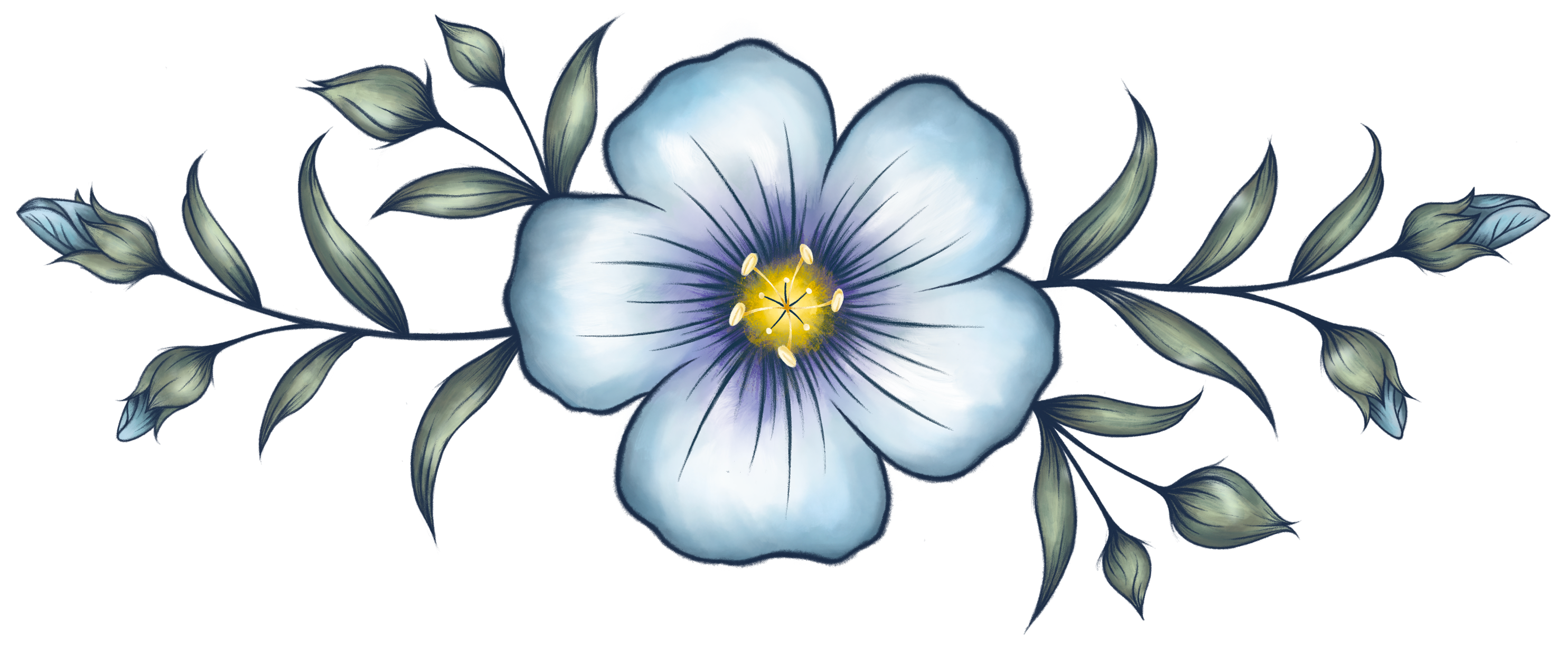
The flax plant grows to about a meter tall, produces small blue flowers, and is ready to harvest in roughly 100 days. Unlike most crops, the whole plant is put to use. The long fibers become apparel and home textiles. Shorter fibers can produce paper and cordage. The seeds become flax seed and linseed oil. Even the woody waste left over after processing is used for animal bedding and particleboard.
When you read "100% linen" on a Goddess Gear label, that means the cloth is woven entirely from flax fiber.
How is linen made from a flax plant?
Linen is made by harvesting the plant, separating its fibers through a controlled rotting process called retting, then spinning and weaving those fibers into cloth. It's a time intensive process and that is part of why quality linen costs more.
Here's the chain from field to fabric:
- Harvesting - Flax is pulled up by the root rather than cut, which preserves the full length of the fiber.
- Retting - The stalks are laid in a field (dew retting) or soaked in water so natural bacteria break down the pectin holding the fibers to the woody core. Dew retting requires no extra water at all.
-
Scutching and hackling - The dried stalks are crushed and combed to separate the long, usable fibers from the woody bits.
- Spinning - Fibers are twisted into yarn.
- Weaving —-Yarn is woven into the fabric that is then dyed, cut and sewn.
The retting step is where most of linen's sustainability story lives. Dew retting uses field moisture and time instead of chemicals or heavy water use, which keeps the footprint low before the fabric ever reaches a sewing table.
Why is linen considered sustainable?
Linen is sustainable because the flax plant requires little water, grows without much fertilizer or pesticide, and the entire plant can be utilized. Linen can be a fabric durable enough to stay out of the landfill for decades. Most "eco" claims rest on one of those points. Linen hits all four.
The European Confederation of Flax and Hemp reports that flax grown in Western Europe is largely rain fed, which is the headline number worth remembering: a fabric that doesn't have the irrigation requirements cotton does. According to the same body, flax cultivation in Europe also acts as a carbon sink.
But here's the part most sustainability blogs skip: durability is a sustainability feature. The most wasteful garment is the one you replace every season. Because linen is durable and long wearing, a piece sewn today can outlast five fast-fashion versions of the same thing. That's fewer garments made, shipped, and thrown away over a lifetime, which is the real win.

Is linen more sustainable than other natural fibers?
Not automatically. As with so many things, it's complex. Linen's advantage depends on how it's grown, retted, and finished — and the same caution applies to other natural fibers. This is where I'll be plain about it: a label that says "natural" or "plant-based" is not proof of low impact.
A few things to be aware of:
-
Synthetic blends negate the benefit. A "linen blend" that's 30% flax and 70% polyester is mostly plastic. It won't biodegrade and it won't last the way pure linen does. Other natural fibers blended with linen don't carry this issue as they are biodegradable as well. At Goddess Gear we happily use blends as well as 100% linen. Linen blended with organic cotton, and hemp with organic cotton are two of my favorites. Blending two fibers with different characteristics can take advantage of the best characteristics of both. Organic cotton blended with both linen and hemp lends softness and some wrinkle control.
-
Water retting can pollute. When flax is retted in tanks of water instead of dew-retted in a field, the runoff can carry organic load into waterways. Dew retting avoids this.
- Heavy dyeing and finishing can undo a good fiber's clean start. Un-dyed or low-impact dyed linen keeps the footprint where it should be. At Goddess Gear all of the fabrics we use are dyed using low impact fiber reactive dyes.
My rule of thumb for the natural fibers I work with: choose for end use.. For hot weather and longevity, linen wins. For everyday softness against the skin, organic cotton . For rugged durability, hemp. None of them is "the best" in a vacuum, they're tools for different jobs.
How can you tell real linen from something else?
You can identify genuine linen by reading the fiber-content label, feeling the texture, and watching how it wrinkles.
-
The label says 100% linen or 100% flax. "Linen-look," "linen-style," or "linen-feel" almost always means a synthetic. Check the full fiber content on the label.
-
It wrinkles, and the wrinkles are soft. Linen creases readily — that's not a flaw, it's the fiber. Polyester resists wrinkles in a way pure linen never will.
| - It feels cool and slightly crisp at first, then softens with every wash. A linen piece you've owned for years feels nothing like a new one.
- It has subtle slubs. Small variations in the thickness of the yarn which show up as slubs in the finished textile are natural to flax and a mark of the real thing, not a defect.
How do you care for your linen so it lasts years?
Care for linen by washing it in cool water, skipping high heat, and letting it air dry when you can. Treated kindly, linen doesn't just survive washing — it gets better, softening over years of wear.
- Wash cool, never hot, to protect the fibers and the color.
- Skip the dryer's high heat. Tumble low or hang dry. Heat is the main culprit that shortens a linen garment's life.
- Embrace the wrinkles, or steam or spray them out with water. Ironing isn't required unless you want a crisp look.
- Store it dry. Linen handles humidity well but, like any natural fiber, prefers a dry drawer over a damp one.
A linen piece you care for this way is one you hand down, not throw out. That's the quiet point behind the whole sustainability conversation. For more on how to care for your natural clothing, our blog post has more.
Frequently asked questions
What is linen fabric made of?
Linen is made from the fibers inside the stalk of the flax plant. It's a bast fiber, harvested by pulling the whole plant, then retting, combing, spinning, and weaving the fibers into cloth. Pure linen contains no synthetic material.
Why is linen better for the environment than cotton?
Flax needs far less water than cotton — often growing on rainfall alone — and requires fewer pesticides and fertilizers. The entire flax plant can be used with almost no waste, and the finished fabric is strong enough to last decades, which keeps clothing out of landfills.
Can you wear linen in winter?
Yes. Linen regulates temperature both ways. It insulates when layered and pulls moisture off your skin without trapping it, so it stays comfortable in cold weather as well as hot. A linen layer under a sweater works well in winter.
Is linen fabric biodegradable?
Yes, when it's minimally treated, linen is biodegradable . Blended linen mixed with polyester or other synthetics will not break down the same way, which is why looking for textiles created from 100% linen or another natural fiber matters.
Does linen shrink or wear out quickly?
Linen is one of the strongest natural fibers, roughly 30% stronger than cotton, so it resists wear better than most fabrics. It does shrink which is why it is a good idea to look for brands such as Goddess Gear who preshrink their fabric and/or garments so there are no nasty surprises after you wash and dry your new garment for the first time.
It is wise to wash your linen garments in cool water on a gentle cycle and then machine dry briefly until damp and hang to finish drying. Minimal dryer time/air drying extends the lifetime of your linen garments for years. Always read and follow care instructions in your garment, as these can vary by brand and on how the fabric was produced.